The Intel Brief · Transmission 003
The C-130 Hercules: Workhorse of the American Fleet
· 5 min read
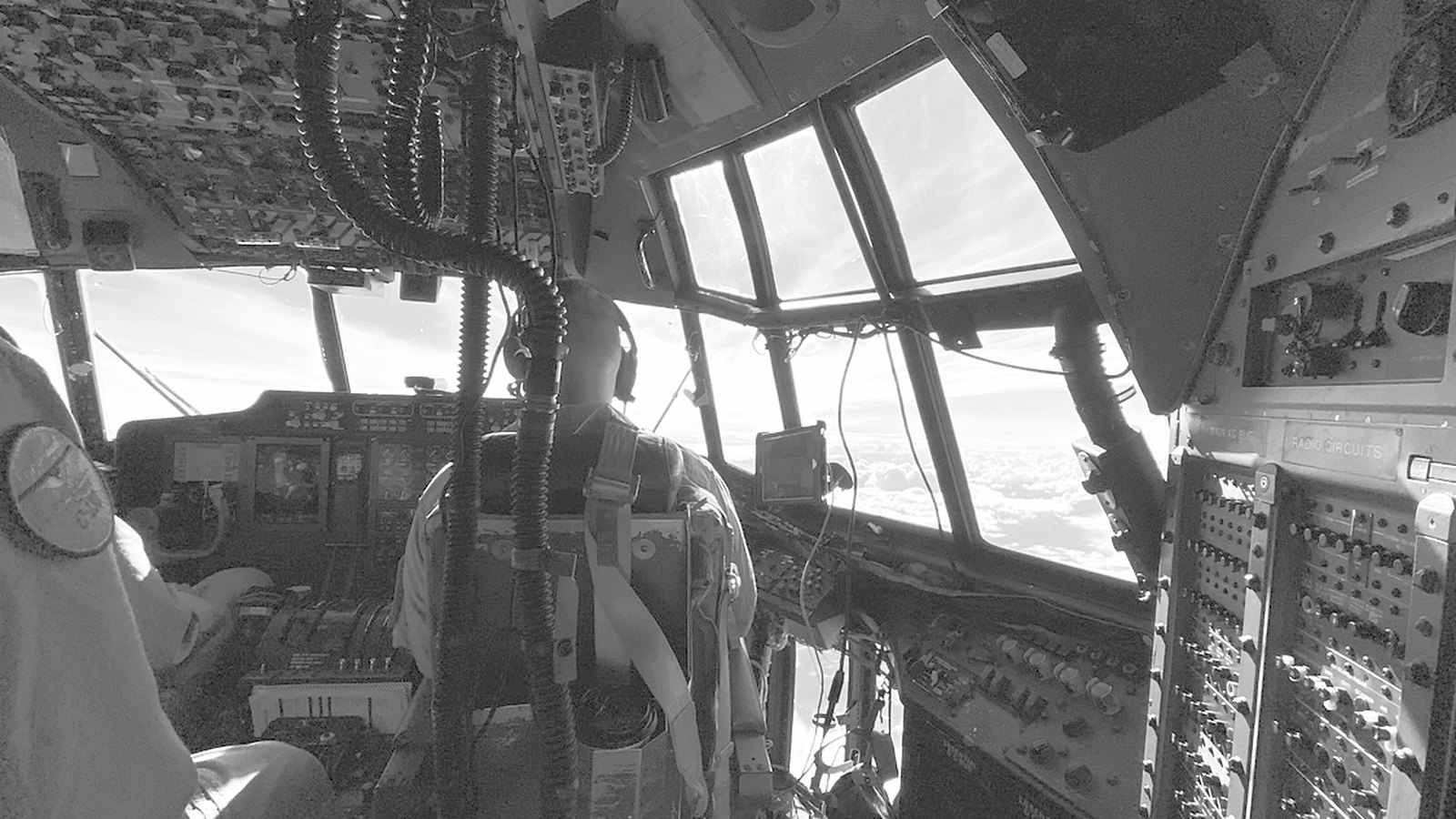
Seventy-plus years into its production run, the Lockheed C-130 Hercules is still the airplane everyone calls when the runway is short, the field is unimproved, and the load has to get there anyway. I have flown on them. From a jump seat and from the back, where cargo rides. You do not forget the sound.
A design that got it right the first time
The Air Force wrote the requirement in 1951. Lockheed won it, and the prototype YC-130 first flew on August 23, 1954, out of Burbank, California, with Stanley Beltz and Roy Wimmer at the controls on a 61-minute hop to Edwards. The C-130A entered service in December 1956. It has been in continuous production ever since, which gives the Hercules the longest continuous military aircraft production run in history.
Nothing about it was exotic. High wing, four turboprops, a rear ramp, and gear built to take a beating. What made it work was the integration: proven parts arranged for one job, hauling meaningful loads into places without a proper airport. More than 2,700 have been delivered, and Marietta, Georgia has built all but the first two.
What the people who fly it actually say
Ask aircrew about the Herk and you do not get a spec sheet. You get stories about a field that was not really a field, and about an airplane that came back with things wrong that should have kept it on the ground. Dr. Douglas Kennedy, a former Air Force C-130 pilot now teaching history at the Air Force Academy, put it plainly on the type’s seventieth anniversary: the Four Fans of Freedom remains the steadfast tool for all contingencies.
The affection is earned rather than romantic. Crews trust it because it is honest about what it will and will not do, and because it keeps showing up. It has flown to both poles, dropped supplies from Vietnam to Afghanistan, and hauled relief into places where the alternative was nothing at all. One even landed on a carrier deck without a tailhook, which nobody has felt the need to repeat.
The H model, and a Hercules with a NASA tail number
The C-130H entered service in March 1965 and became the backbone of the fleet, with 1,202 delivered. Sixty years on it is still flying, and not only in uniform.
NASA operates one. N436NA, called NASA 436, is a C-130H built in 1986, formerly an Air Force aircraft, picked up by Wallops Flight Facility in Virginia in 2013 and brought into the Airborne Science Program in 2015. It flies as a long-range airborne laboratory: nadir ports cut into the belly for instruments, experimenter power on board, sonobuoy and dropsonde tubes on the ramp. Its first mission was the IceBridge campaign to Greenland. In October 2023 it flew the GUSTO astrophysics payload to McMurdo Station, Antarctica, a round trip of roughly 26,400 nautical miles.
A 1986 airframe hauling a telescope to the bottom of the world in 2023 is a fair summary of the type.
Fighting fire
Eight Department of Defense C-130s are set aside for the Modular Airborne Fire Fighting System. The units are the 146th Airlift Wing of the California Air National Guard, the 152nd out of Reno, the 153rd out of Cheyenne, and the Air Force Reserve’s 302nd Airlift Wing at Peterson, which has flown the mission since 1993.
MAFFS is a pressurized tank system that slides into the cargo compartment and discharges through a nozzle on the rear left side. It puts up to 3,000 gallons of retardant down in under ten seconds, laying a line a quarter mile long, and it can be reloaded in under twelve minutes. Nothing is cut into the airplane. It goes in, the aircraft becomes an airtanker, and it comes back out.
These are surge assets, called when the contracted civilian tankers are committed or unavailable, and they are not initial-attack qualified, so they work behind a lead plane. All eight were activated for the Southern California fires in January 2025.
Still working, in and out of uniform
The C-130J Super Hercules is the current build, with more than seventy nations operating some version of the type. The Coast Guard flies the HC-130J on long-range search and rescue. The Marines run the KC-130J as a tanker. The AC-130 gunship and the specialized electronic variants come off the same basic airframe.
The civilian side is older than most people realize. The L-100 was certified by the FAA in 1965 and roughly 114 were built through 1992, many still hauling freight into places the majors will not go. The LM-100J is its modern replacement, and the firefighting variant continues four decades of Hercules work on wildfires, alongside the military airframes that fly MAFFS tanker missions for the Forest Service.
Why it still matters
The Hercules is the argument for building something honest and then leaving it alone. Seven decades of upgrades have moved the engines, the props, and the entire flight deck into the current century, and none of it required starting over. That is rare, and it is worth studying, because most airplanes do not earn that kind of patience.
It is a workhorse in the literal sense. Not the fastest, not the prettiest, and not trying to be. It just goes, comes back, and goes again.