The Intel Brief · Transmission 005
ROTAX Maintenance: The Standard Most Shops Miss
· 3 min read
A ROTAX is not a small Lycoming. Shops that treat it like one hand back airplanes with unserviced carburetors, original spark plugs, and a signed logbook.
Where it came from
ROTAX sold the first 912 in 1989, uncertified, for ultralights and motorgliders. FAA certification came in 1995. The 50,000th 912-series engine shipped in 2014.
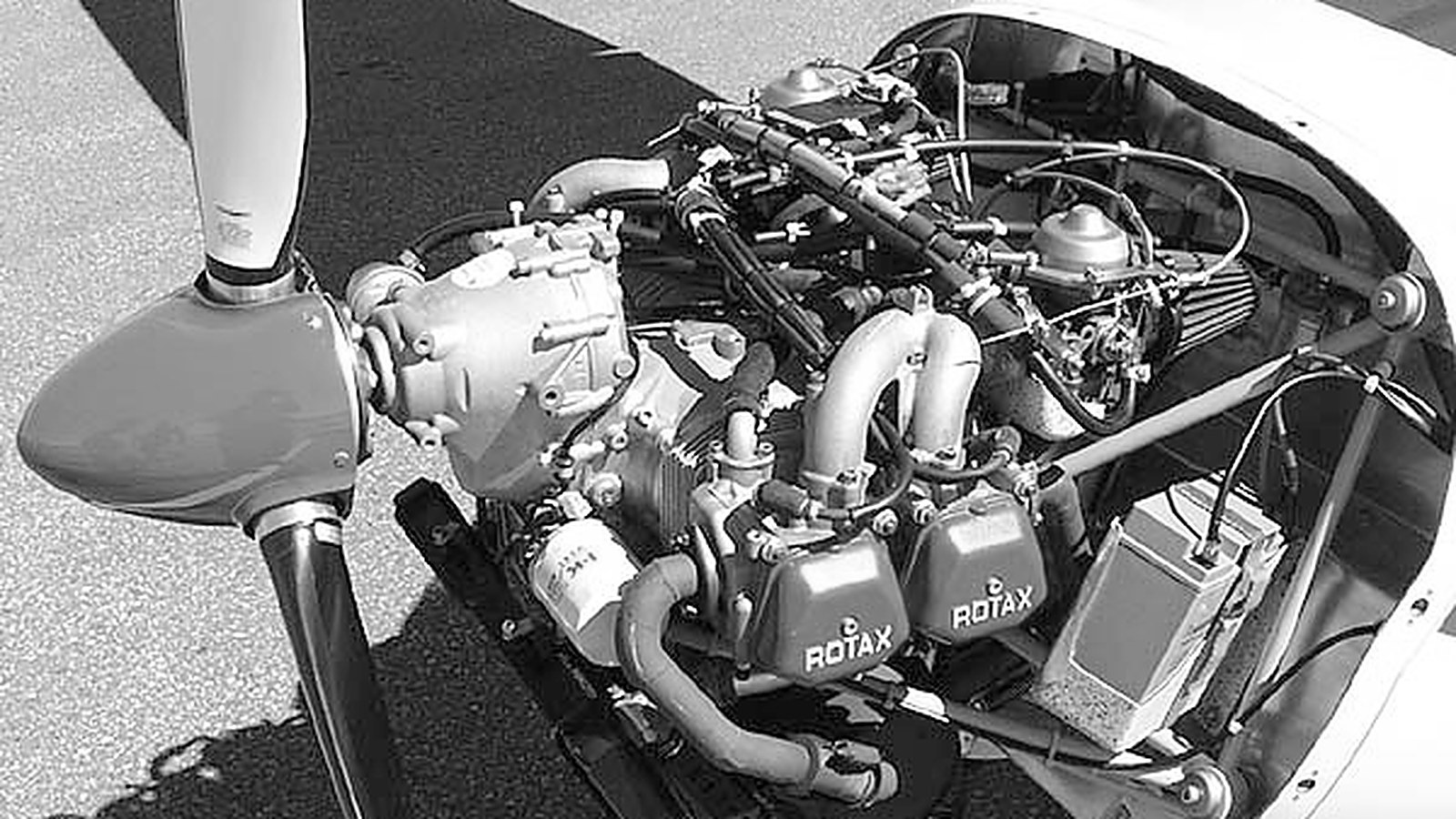
The design broke with tradition on purpose: air-cooled cylinders with liquid-cooled heads, dry sump lubrication with a separate oil tank, hydraulic valve lash, dual electronic ignition, and a gearbox turning 5,800 crankshaft rpm into roughly 2,400 at the prop. Certified engines carry an overload clutch, so a prop strike often means a gearbox inspection instead of a teardown.
The numbers
The 912 UL runs 1,211 cc and 80 hp. The 912 ULS and 912 S open to 1,352 cc for 100 hp. Both burn mogas, which is most of the operating-cost story. The fuel-injected 912 iS added FADEC in 2012. TBO climbed as the engine proved out: 600 hours at launch, 1,200 by 1999, then 1,500 or 2,000 by serial number.
The 916 iS landed in March 2023. Turbocharged and intercooled, 1,352 cc, FADEC, 160 hp takeoff and 137 hp continuous, useful to 23,000 feet, 2,000-hour TBO, 189 lb dry with gearbox, turbo, intercooler and exhaust. Same continuous power as the 915 iS on 10 to 20 percent less fuel.
What they fly on
The 912 family powers the Diamond DA20, Tecnam P2002 and the twin P2006T, Zenith STOL CH 701, Pipistrel Sinus, and most of the light sport fleet in this country. The 916 iS launched on the CubCrafters Carbon Cub UL and now turns props on the Sling TSi, the Bristell 916RG Turbo, and the JMB VL-3.
ROTAX holds the standard
ROTAX runs its own certification program, the independent ROTAX Maintenance Technician scheme, tiered from Familiarization through Service, Maintenance, Heavy Maintenance, and Overhaul. Ratings expire in 24 months. No grandfathering.
Here is the part that matters to an owner: working on a certified aircraft’s ROTAX engine takes the ROTAX rating on top of the A&P. The certificate alone does not cover it. ROTAX built the program because the engine does not behave like the ones most technicians trained on, and they are not shy about enforcing it.
How you can tell nobody read the manual
An aircraft came to DNA Aero for an annual plus the 400-hour on the engine. It was running rough with fouled plugs.
The cause took no diagnosis. At the previous 200-hour, the shop that signed it off had not changed the spark plugs and had not serviced the carburetors. Both are scheduled items in the ROTAX manual. Both are the first things anyone trained on the platform touches. That shop was not a ROTAX shop.
The other tells run the same direction. Oil checked without burping the engine, which reads false every time because crankcase pressure pushes the oil back to the tank. Rubber replacement intervals ignored. Coolant treated as an afterthought on an engine with liquid-cooled heads. Carburetor synchronization never touched.
None of it makes a shop dishonest. It makes them untrained, which for the owner is the same outcome.
DNA Aero, and why it moves
DNA Aero is a mobile aviation maintenance organization, co-owned by DA’s founder, built around this exact gap. ROTAX-powered aircraft rarely sit at fields with a trained ROTAX shop on the ramp, and ferrying an airplane three states to get a 100-hour done right is not a maintenance plan.
So the shop travels. Scheduled inspections, carburetor service and synchronization, plugs, rubber, gearbox inspection, troubleshooting, and return to service, done at your hangar by a technician holding both the certificate and the ROTAX rating.
DA and DNA Aero are separate companies that share a standard. DA does avionics, consulting, and mod teams. DNA Aero turns wrenches on the engine.
If your ROTAX is due
We take the shop to you. Scheduled inspection, a deferred squawk, or a second opinion on work somebody else signed off. Same answer: we come to the airplane.
Reach out to DNA Aero or contact DA.